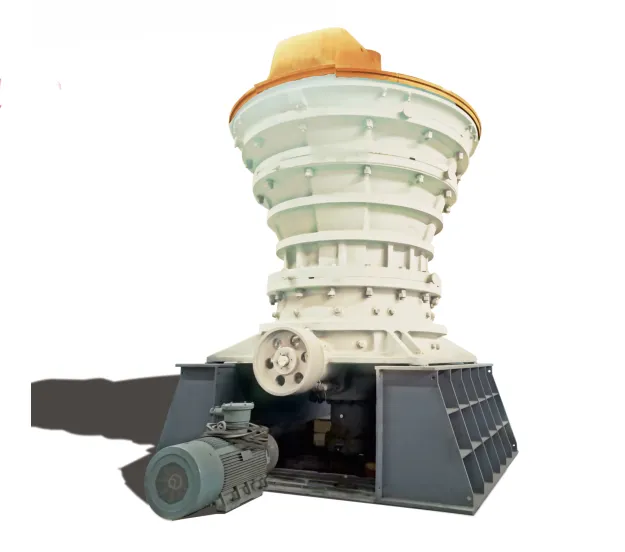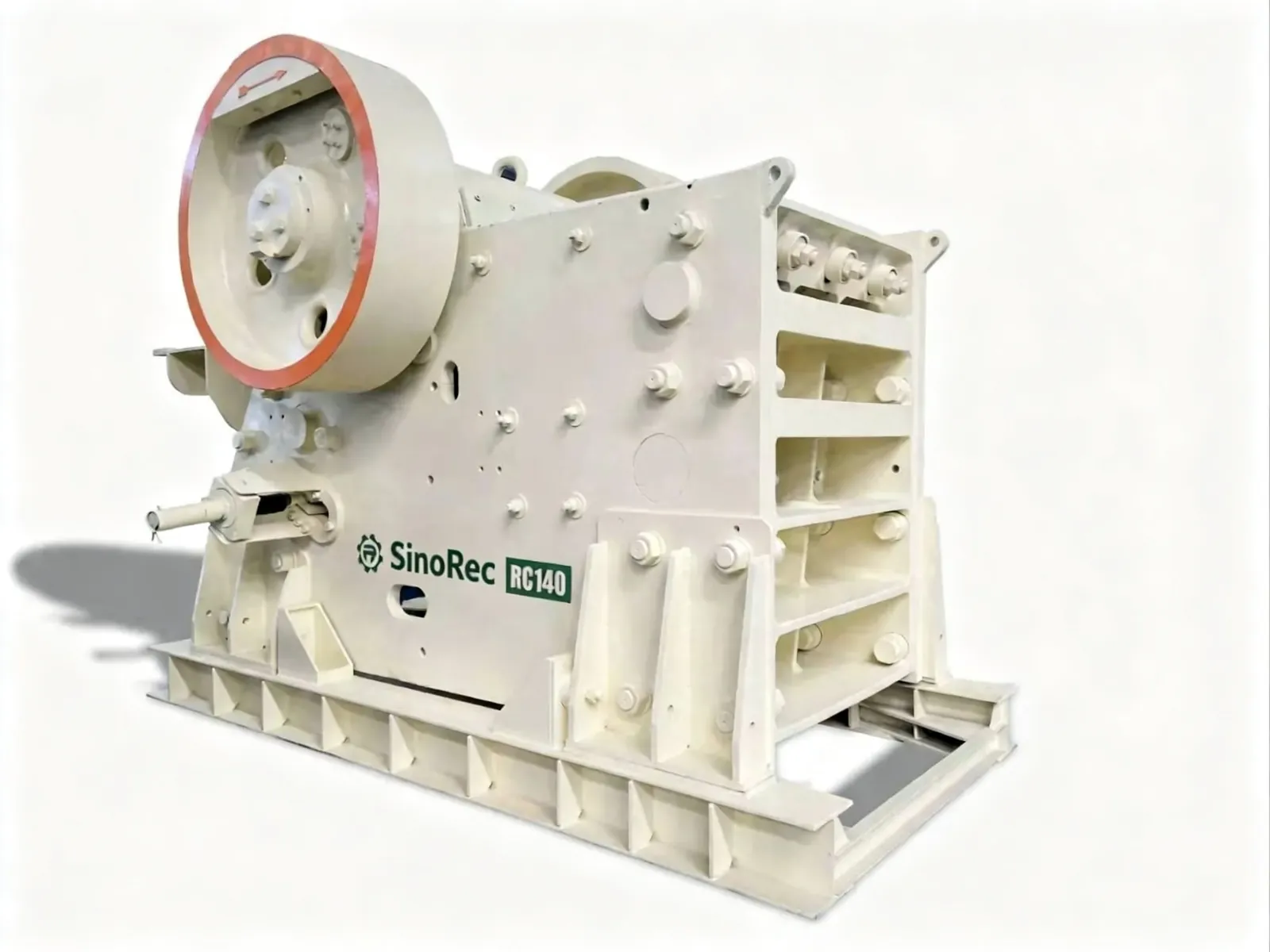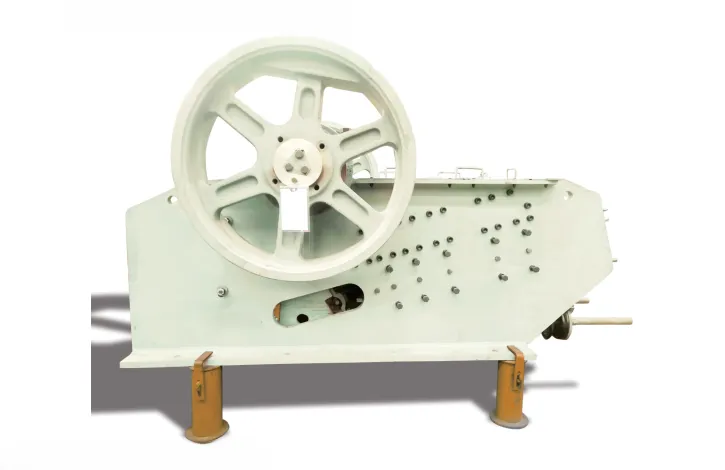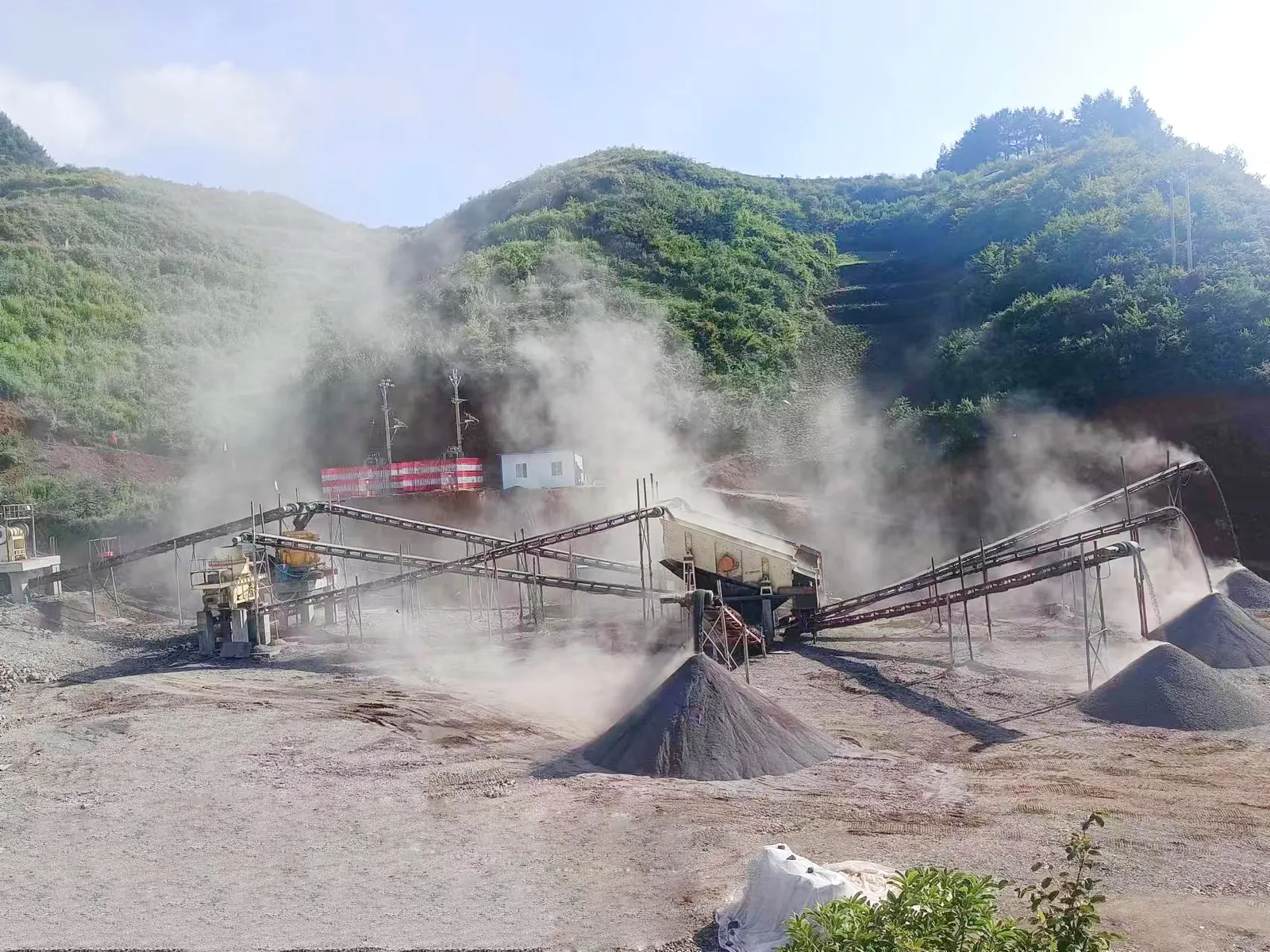
A stationary plant is the permanent answer. The circuit is engineered for one deposit and one duty, set on concrete foundations and built to run for the life of the quarry or the mine. Capacity, product fractions and availability are designed against the actual feed, not against a transport envelope, so there is no compromise on machine size, chute geometry or stockpile layout.
What the engineering covers
- Feed gradation and product specification taken as the design basis
- Stage-by-stage mass balance: primary, secondary, tertiary, screening and sand making
- Foundation and steel structure drawings, chute and transfer-point design
- Belt conveyor routing, stockpile volumes and reclaim arrangement
- Electrical distribution, motor control, dust suppression and water supply
- Installation supervision, commissioning and operator training
Typical circuit
Run-of-mine rock is dumped into a receiving hopper, taken by vibrating feeder to a primary jaw or gyratory crusher, and conveyed to a secondary cone or impact stage. A screen in closed circuit returns oversize and passes the on-size fractions to product piles. Where sand is required, a VSI stage and a fine-grading or dewatering screen are added after the tertiary stage.
Where it is used
Long-life quarries and metal mines with a defined reserve, plants that run two or three shifts for years, and projects where the cost of the plant is recovered over a long production life rather than over a single contract.
Selection note
The machine list, installed power and guaranteed capacity are issued with the proposal once the feed analysis and the required product fractions are fixed. Every machine in the circuit is taken from the families listed in categories 01 to 05.