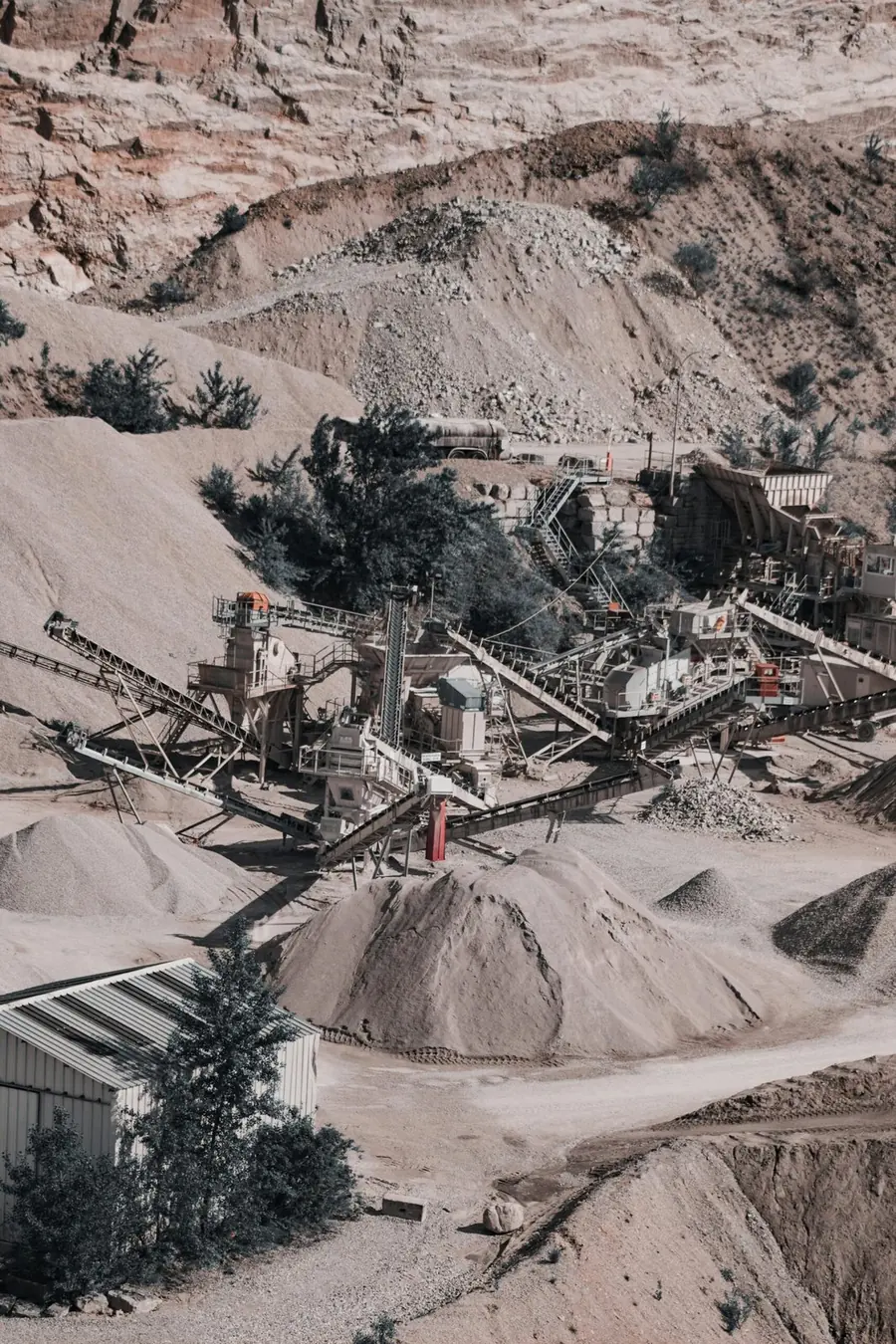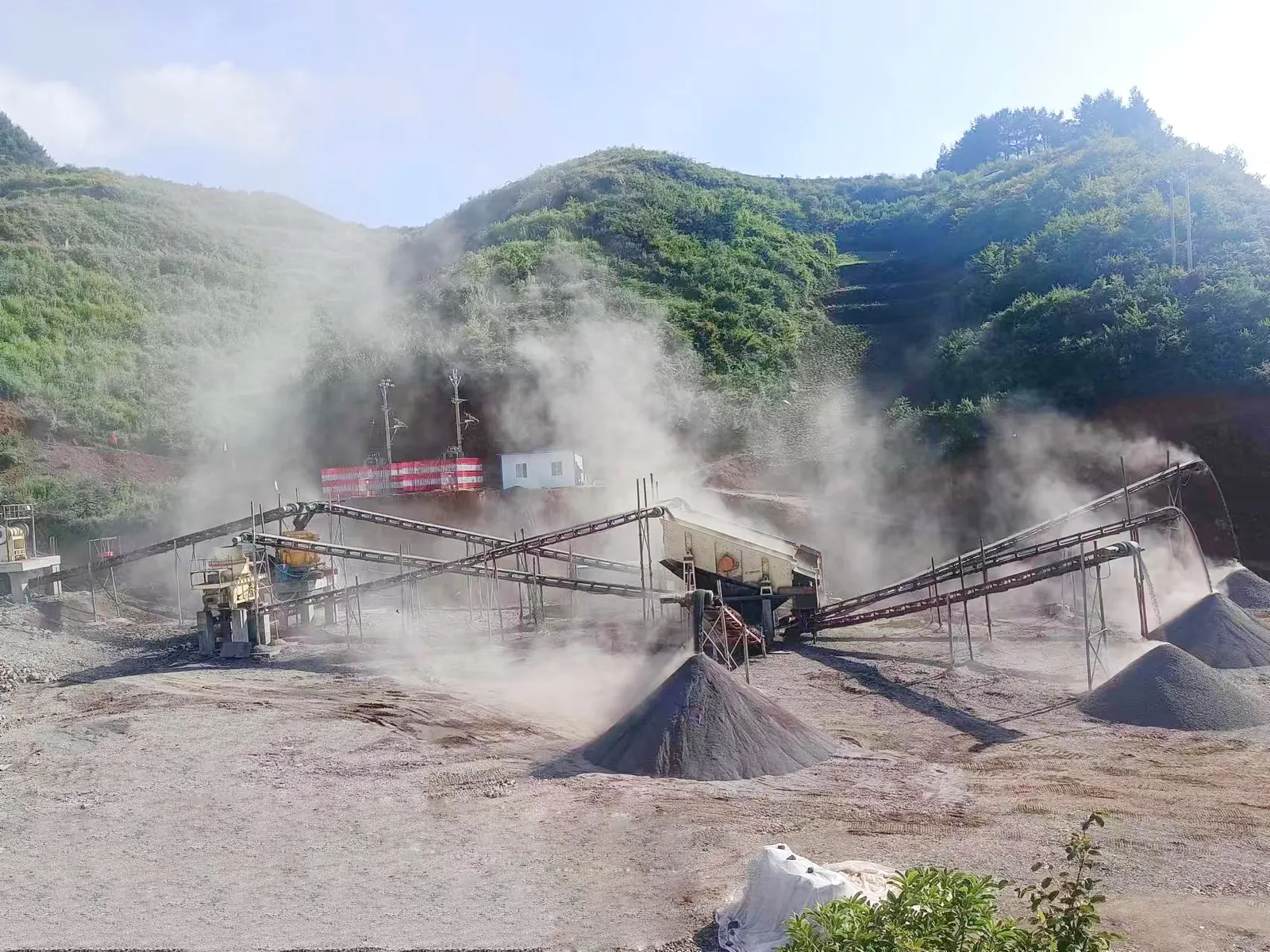
Process configuration
Maximum capacity and service life for long-term quarry operation.
| Stage | Equipment | Function |
|---|---|---|
| Receiving | Truck hopper, apron or vibrating feeder | Uninterrupted primary feed |
| Primary | GC gyratory or RC jaw on concrete foundation | High-tonnage coarse reduction |
| Secondary | RHP multi-cylinder cone | Medium reduction at tight settings |
| Tertiary | RHP / RGP(S) cone or RVSI | Product shaping and sand |
| Screening | YA screens on steel tower | Multi-fraction separation |
| Stockout | Fixed conveyors to silos or stockpiles | Segregated product storage |
Design notes
Designed to the deposit
Plant layout, bench heights and haul roads are planned together, so the primary is positioned to minimise haul distance for the life of the quarry.
Lowest cost per tonne at volume
Continuous operation, high availability and low labour intensity reduce unit cost where the annual output justifies the investment.
Dust and noise
Bag filters at transfer points, enclosed screens and concrete structures keep the plant inside permit limits for populated areas.
Central control
The whole line is operated from a control room with interlocking, production reporting and remote diagnostics.