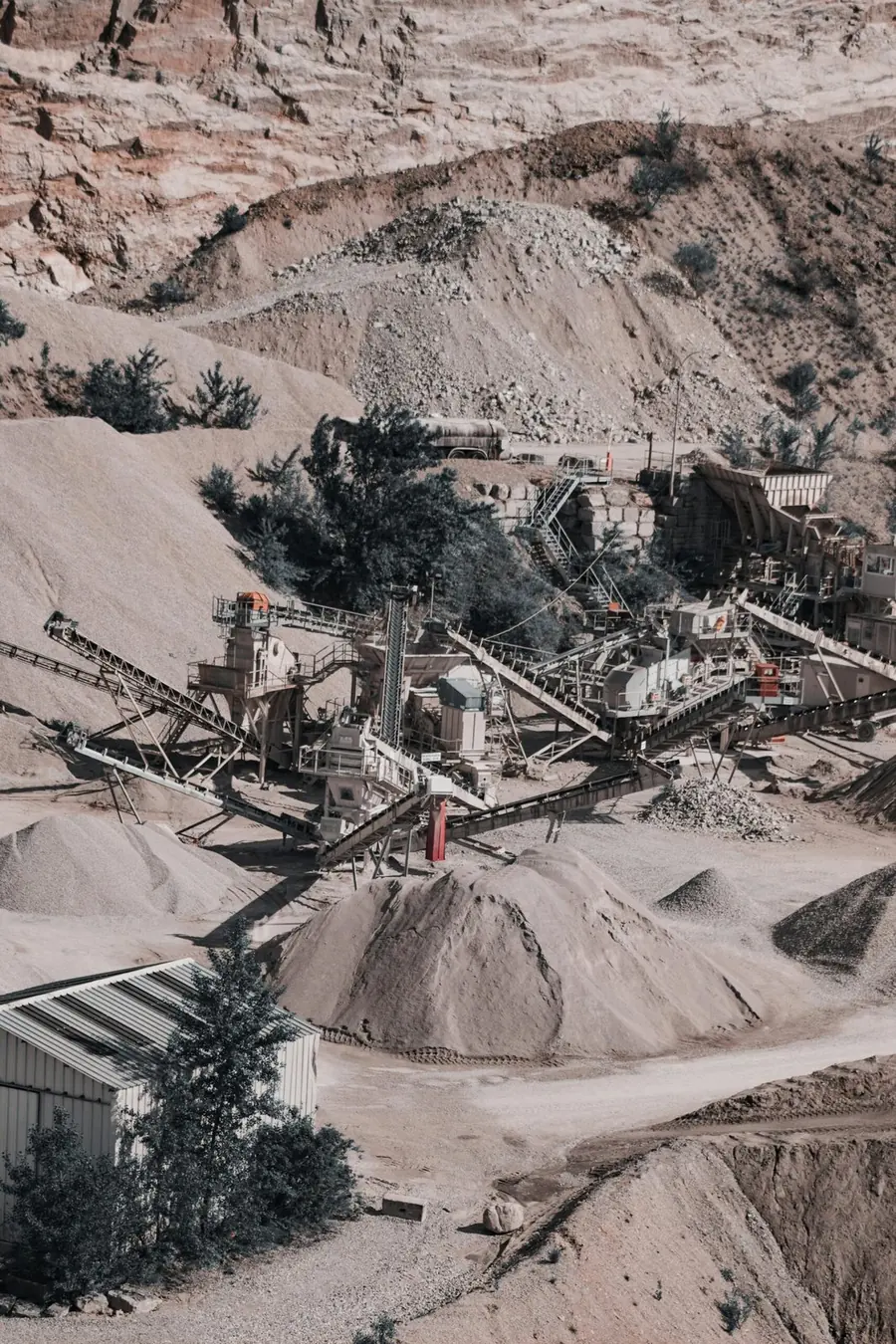
Process configuration
Limestone, dolomite, coal gangue, gypsum and other low-abrasion rock.
| Stage | Equipment | Function |
|---|---|---|
| Feeding | ZSW feeder with pre-screen | Bypass of material already at product size |
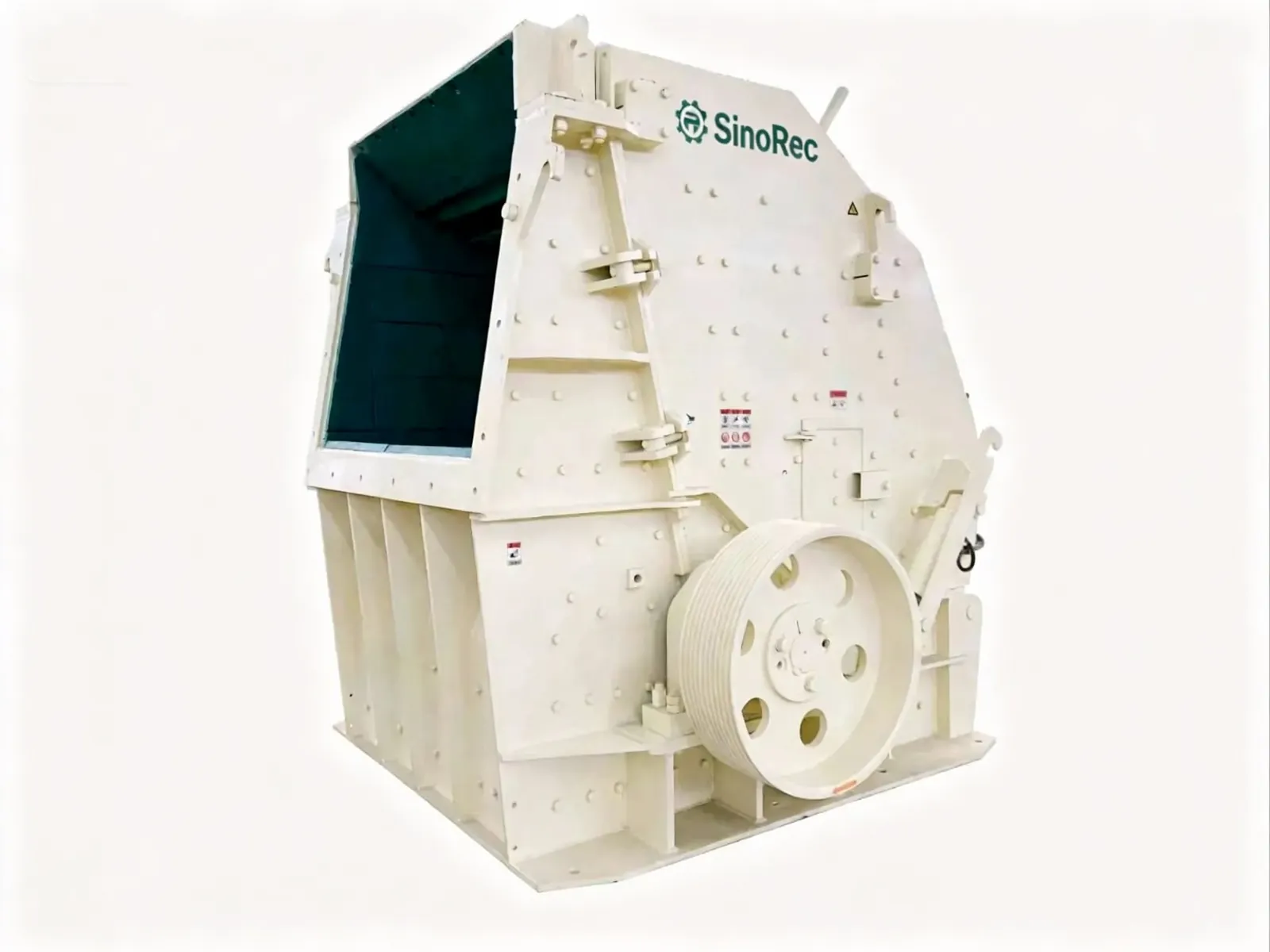
| Primary | RNP impact crusher | Reduction to 0 – 60 mm in one pass |
| Secondary | RNP or RHP cone (where a tighter spec is required) | Closed-circuit reduction |
| Sand | PFL vertical compound or 2PG double roller | Manufactured sand with low over-crushing |
| Screening | YA or ZKX screens | Dry grading or dewatering |
Design notes
Single-pass reduction
The impactor accepts run-of-mine limestone and delivers a graded product in one stage, which removes a crusher and its associated conveyors from the layout.
Sand without over-crushing
PFL vertical compound machines reach a one-pass sand rate above 90% in soft rock; 2PG roller machines hold a narrow fraction with minimal fines generation.
Power and wear
Installed power is lower than an equivalent three-stage compression circuit, and wear-part consumption stays moderate because the rock is not abrasive.
Product flexibility
Blending of fractions, filler removal and dry or wet screening are configured against the specification the market requires.