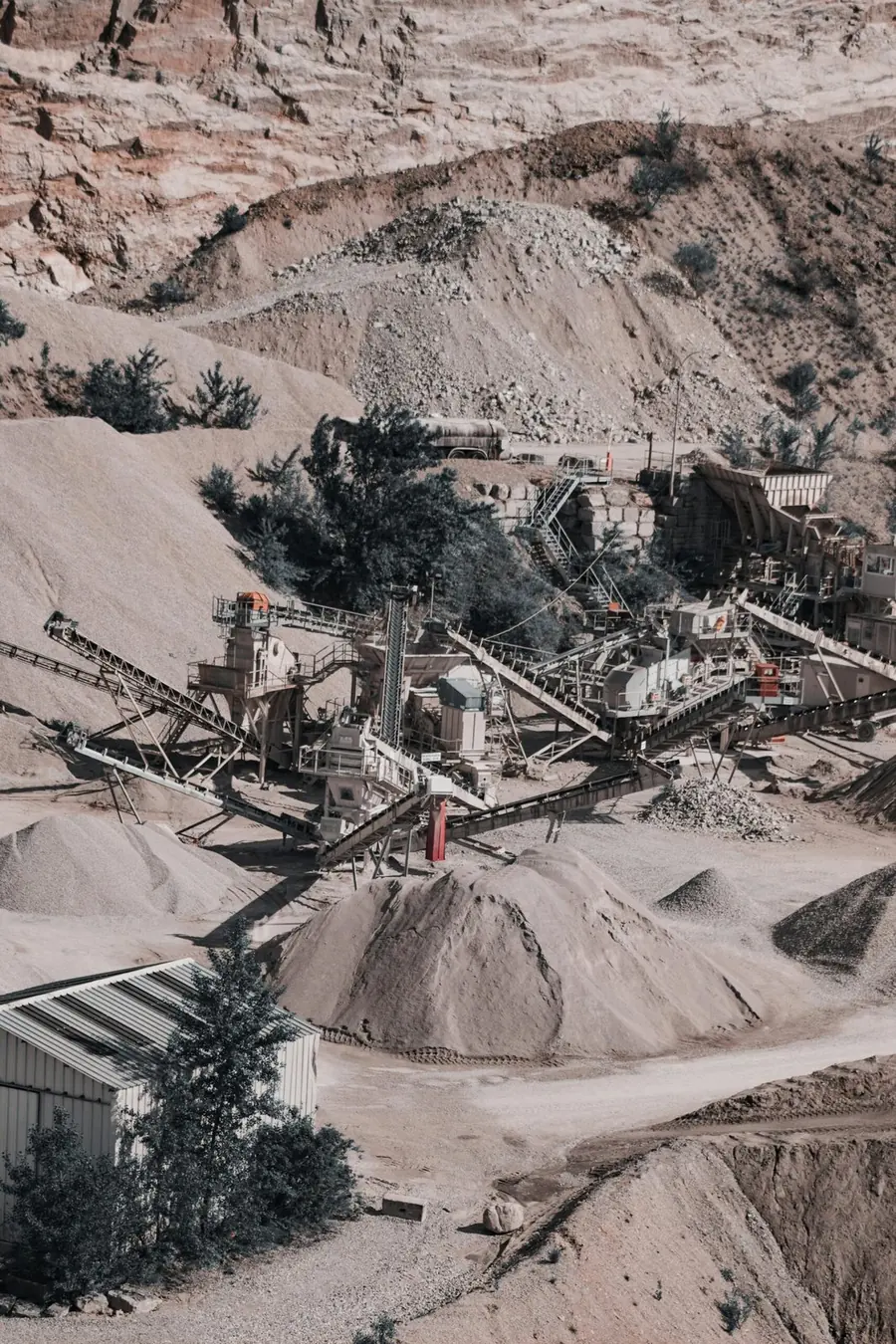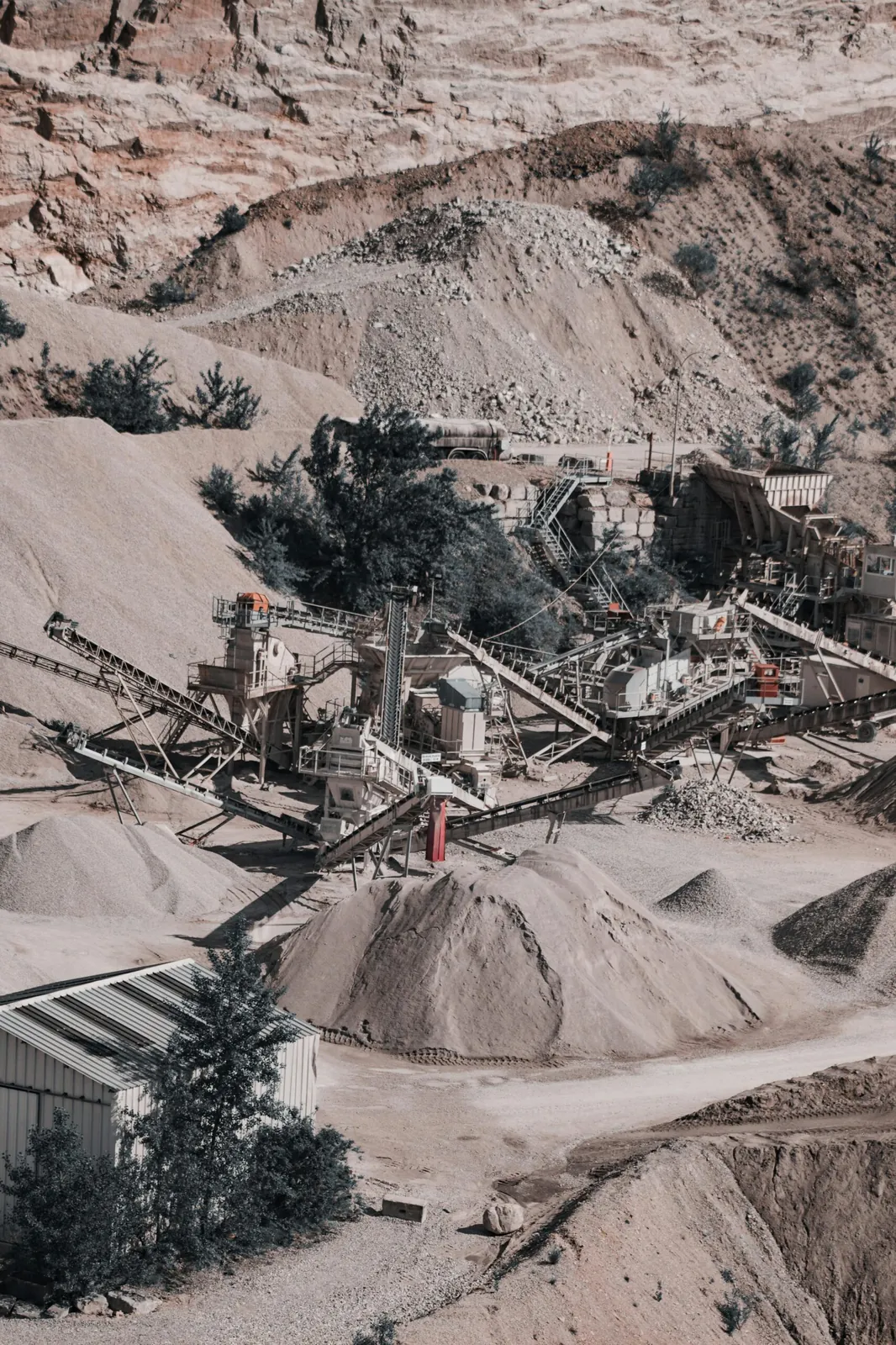
Process configuration
Basalt, granite, river stone, andesite and other abrasive rock.
| Stage | Equipment | Function |
|---|---|---|
| Feeding | ZSW vibrating feeder with grizzly | Removal of fines before the primary |
| Primary | RC jaw or GC gyratory | Reduction to 150 – 300 mm |
| Secondary | RHP multi-cylinder cone | Reduction to 40 – 60 mm, closed circuit |
| Tertiary | RHP or RGP(S) cone | Final reduction to 0 – 25 mm |
| Shaping | RVSI vertical shaft impactor (optional) | Flakiness reduction and sand fraction |
| Screening | YA oil-lubricated screens | Fraction separation and oversize return |
Design notes
Lamination over impact
Compression crushing produces a better particle shape in abrasive rock at a fraction of the wear cost of impact crushing.
Cavity selection
Coarse and extra-coarse cavities are used at the secondary stage; fine and medium-fine cavities at the tertiary stage, matched to the feed curve rather than to the model size alone.
Wear parts
Manganese liners with profiles matched to the abrasion index; change-out intervals are planned so liner replacement coincides with scheduled shutdowns.
Water and dust
Wet suppression at the primary and bag filtration at transfer points where the plant operates near residential or agricultural areas.